Class 12 Economics: Microeconomics – Production and Costs – Get here the Notes for Class 12 Economics: Microeconomics – Production and Costs. Candidates who are ambitious to qualify the Class 12 with good score can check this article for Notes. This is possible only when you have the best CBSE Class 12 Economics Notes, study material, and a smart preparation plan. CBSE 2019 Class 12th Exam is approaching and candidates will have to make the best use of the time available towards the last stage of your CBSE Class 12th Economics Preparation. To help you with that, below we have provided the Notes of 12 Economics for topic Microeconomics – Production and Costs.
Hy welcome to Economic wallah
Production and Costs
1. Production It is the transformation of resources into commodities.
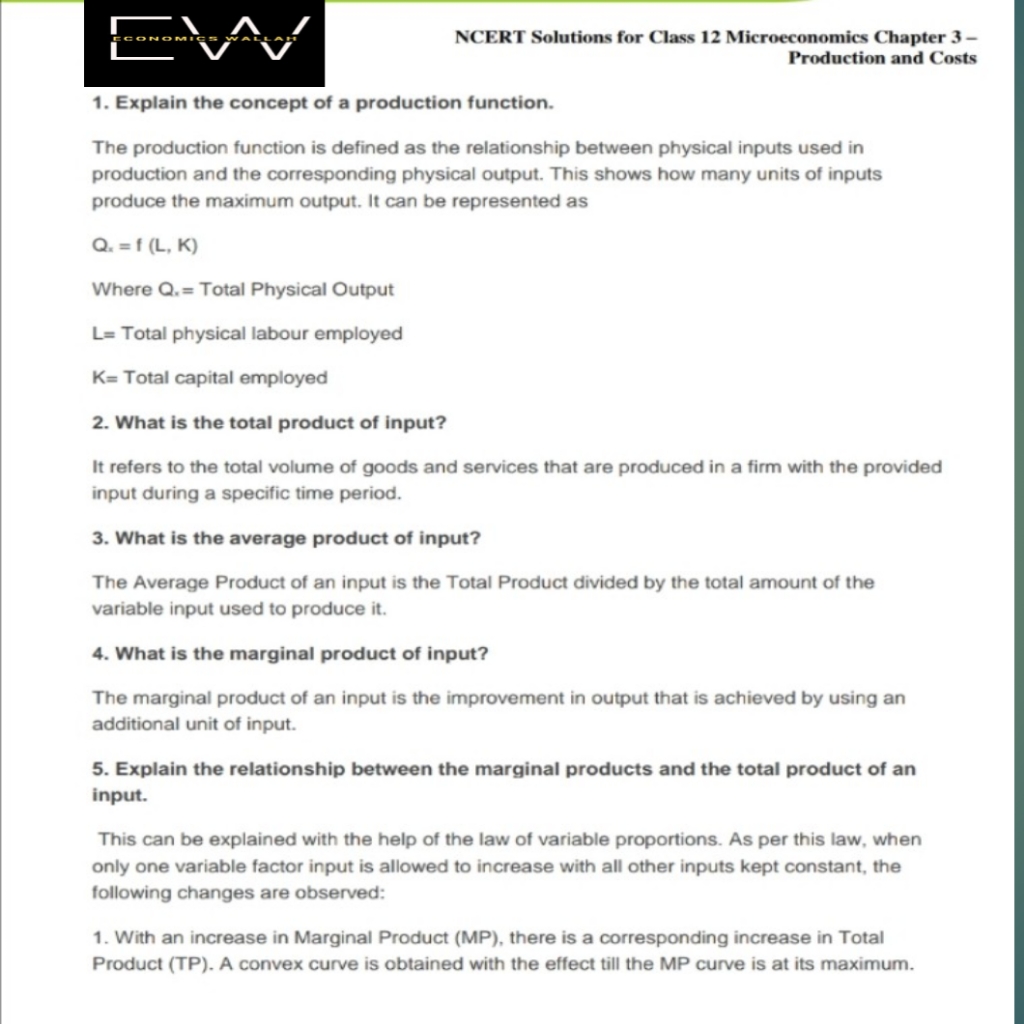
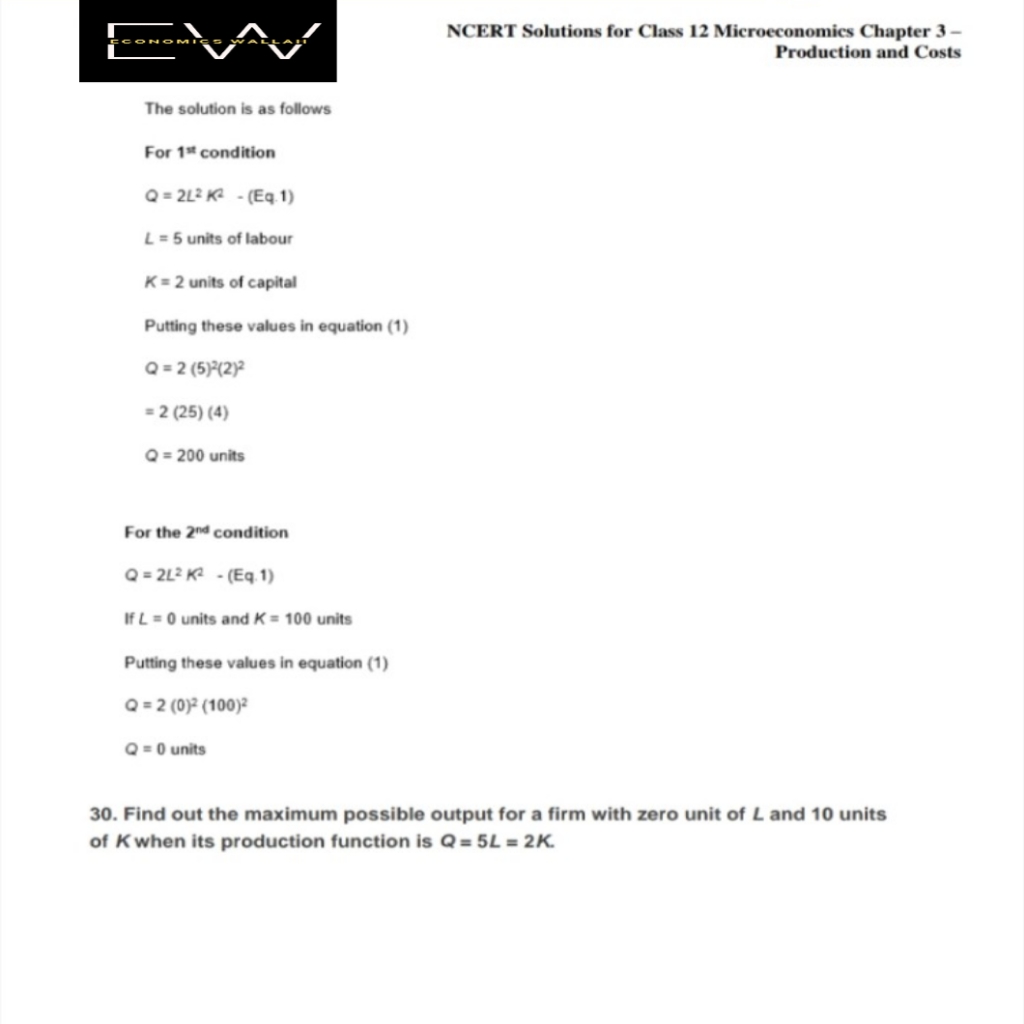
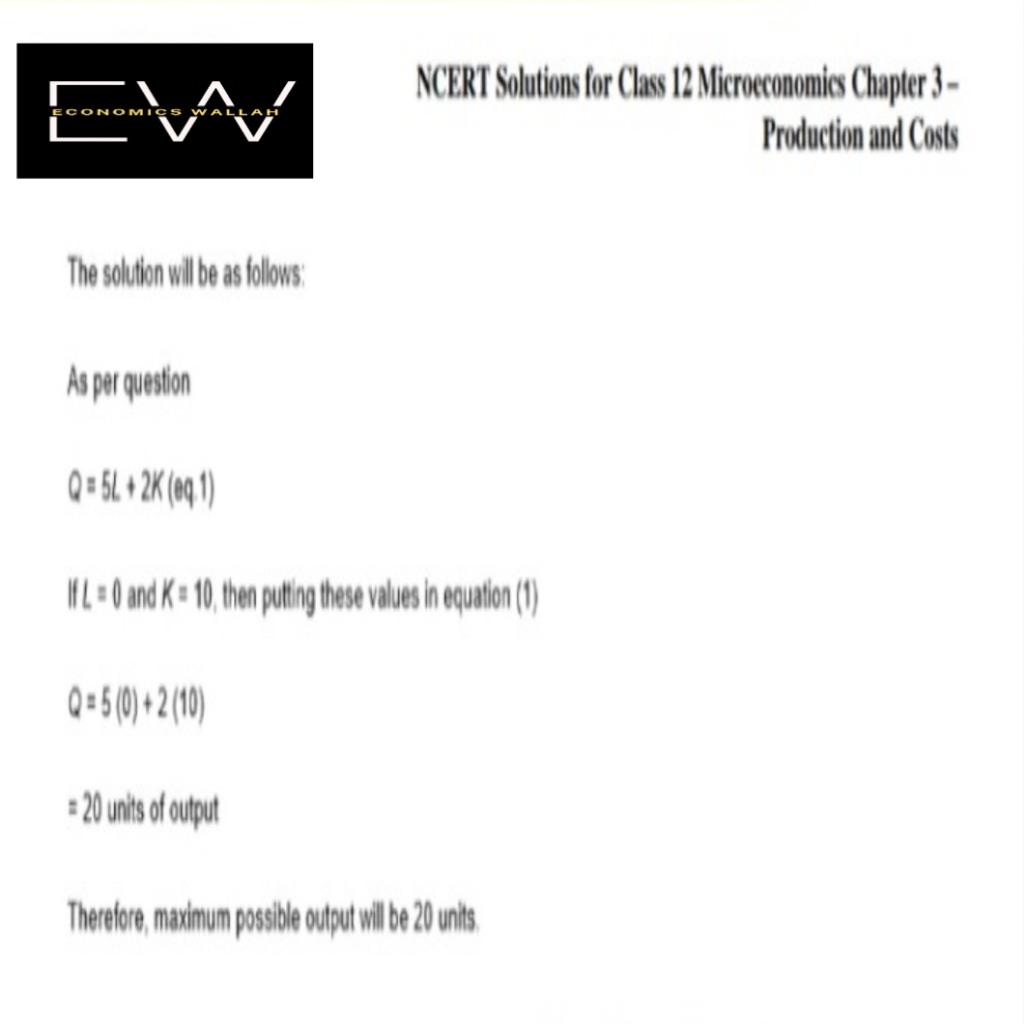
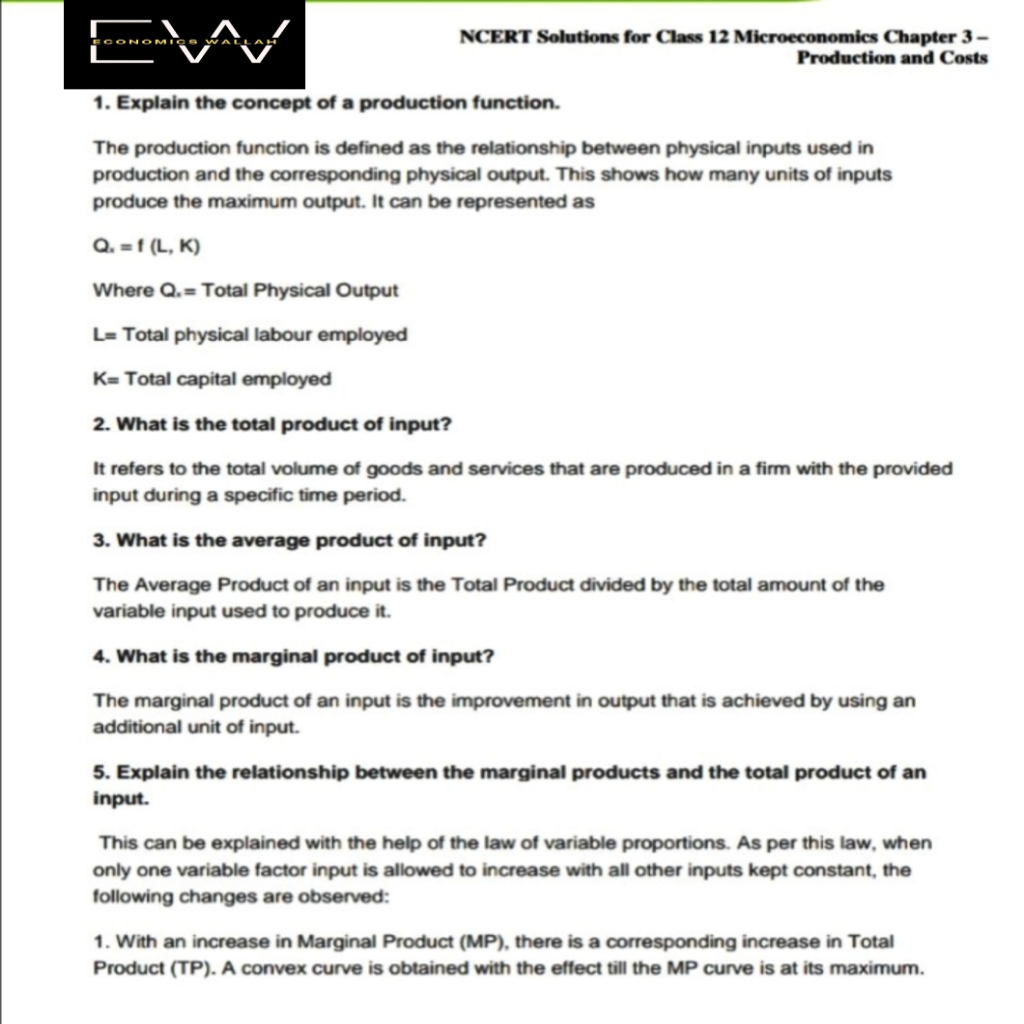
2. Production Function Production function studies the functional relationship between physical input and physical output.
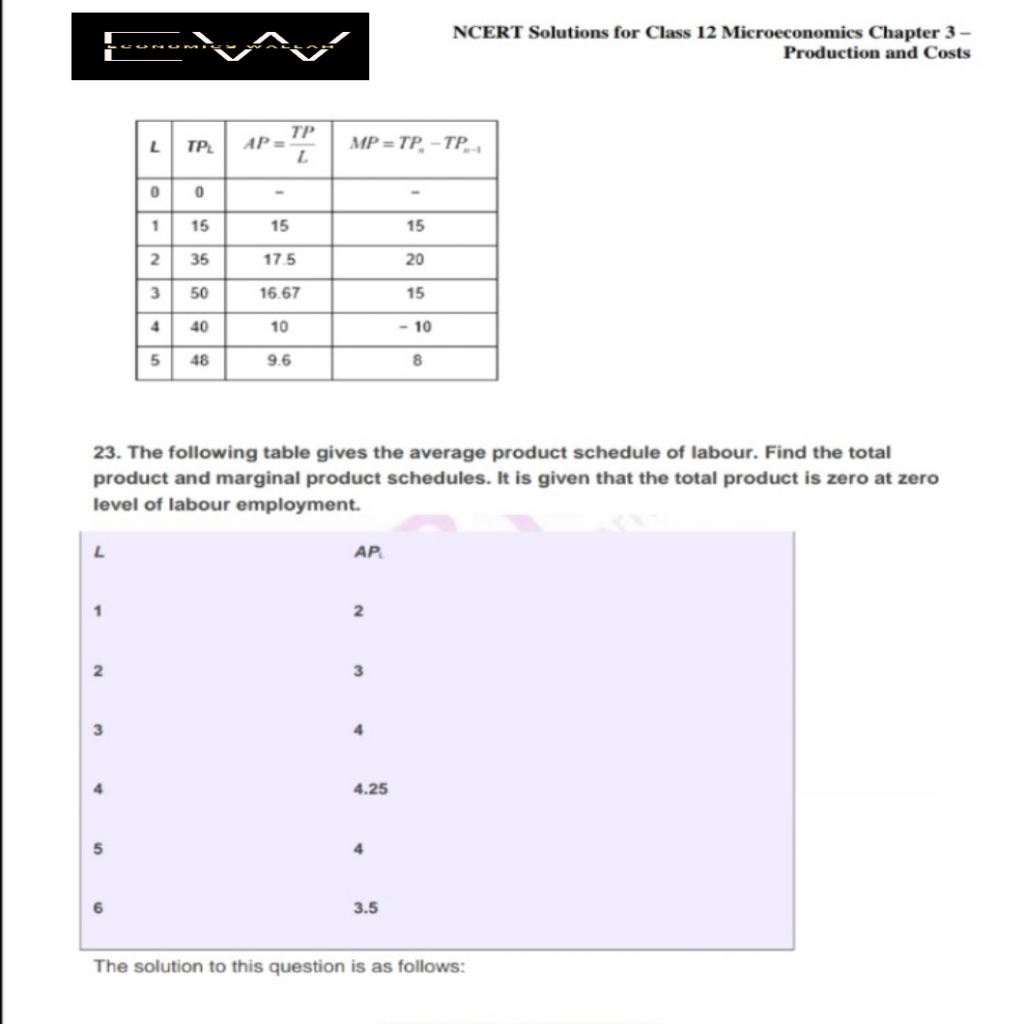
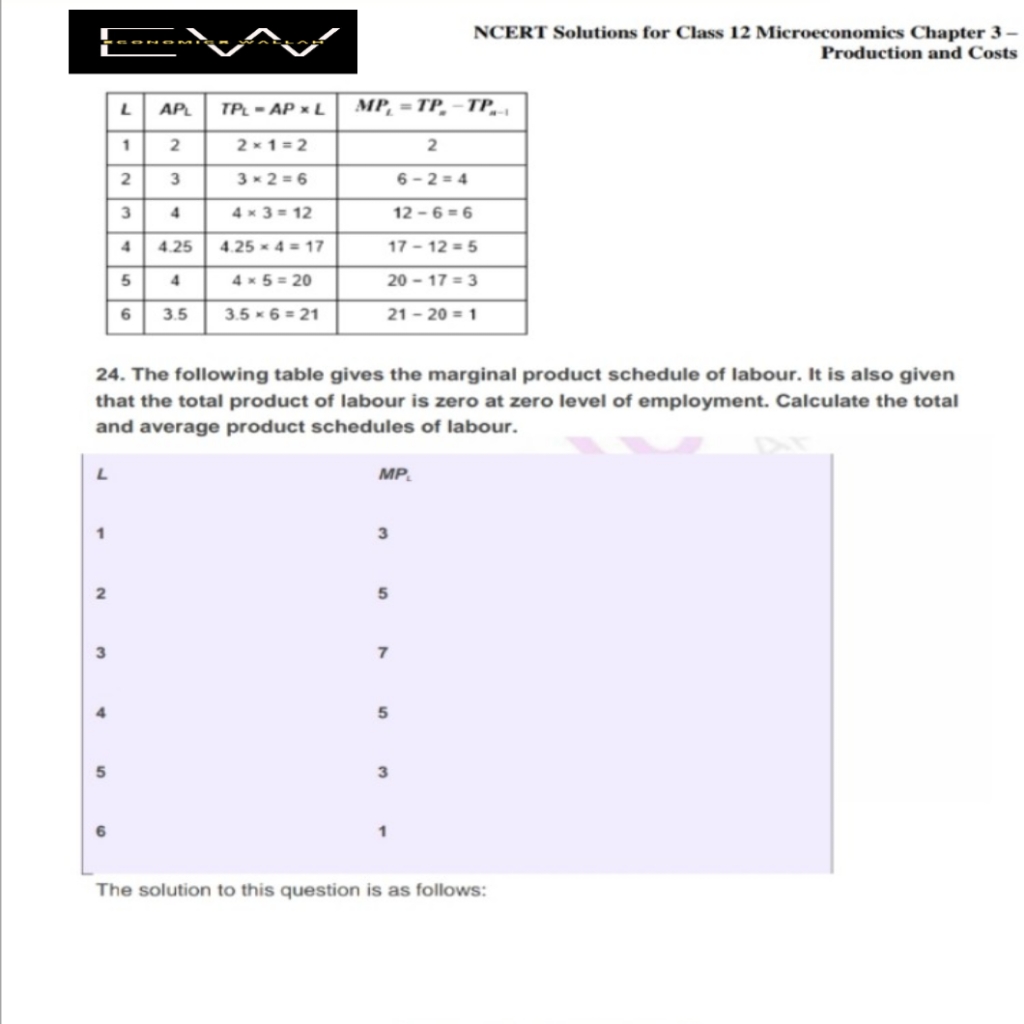
3.Total Product It is the sum total of output produced by all units of labour.
TP= APx L
Here. TP = Total product, AP = Product per unit of labour
L = Units of labour
4. Marginal Product It is the change in total production as result of a unit change in input of a variable factor (ΔL)
ΔTP = Change in total production
MP= TPn -TPn-1
or
MP=.ΔTP/ΔL
5. Average Product It is per unit production of the variable factor
AP= TP/L
Here, AP =Average product
TP = Total product
L= Labour
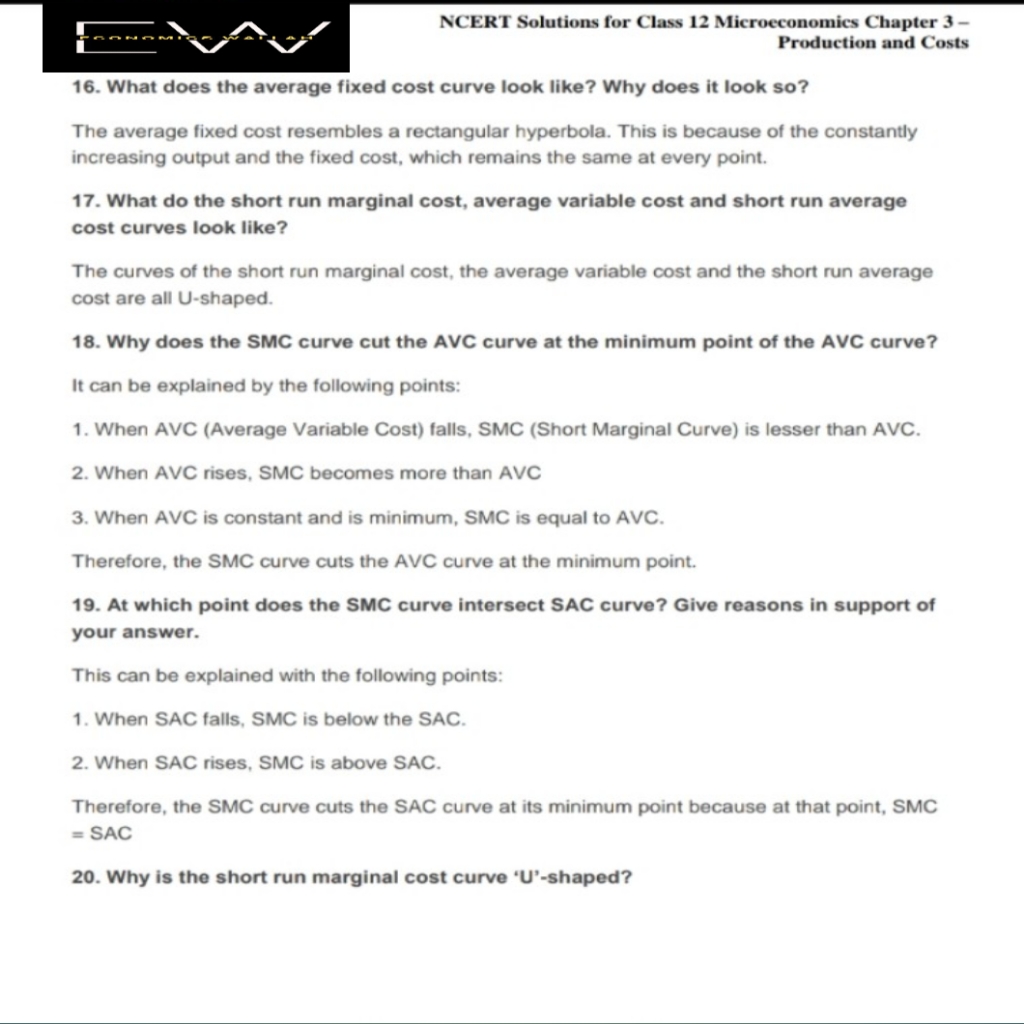
6. Short run The time period during which a finn, in order to make changes in its production can change only in its variable factors but not in its fixed factor, is termed as short run.
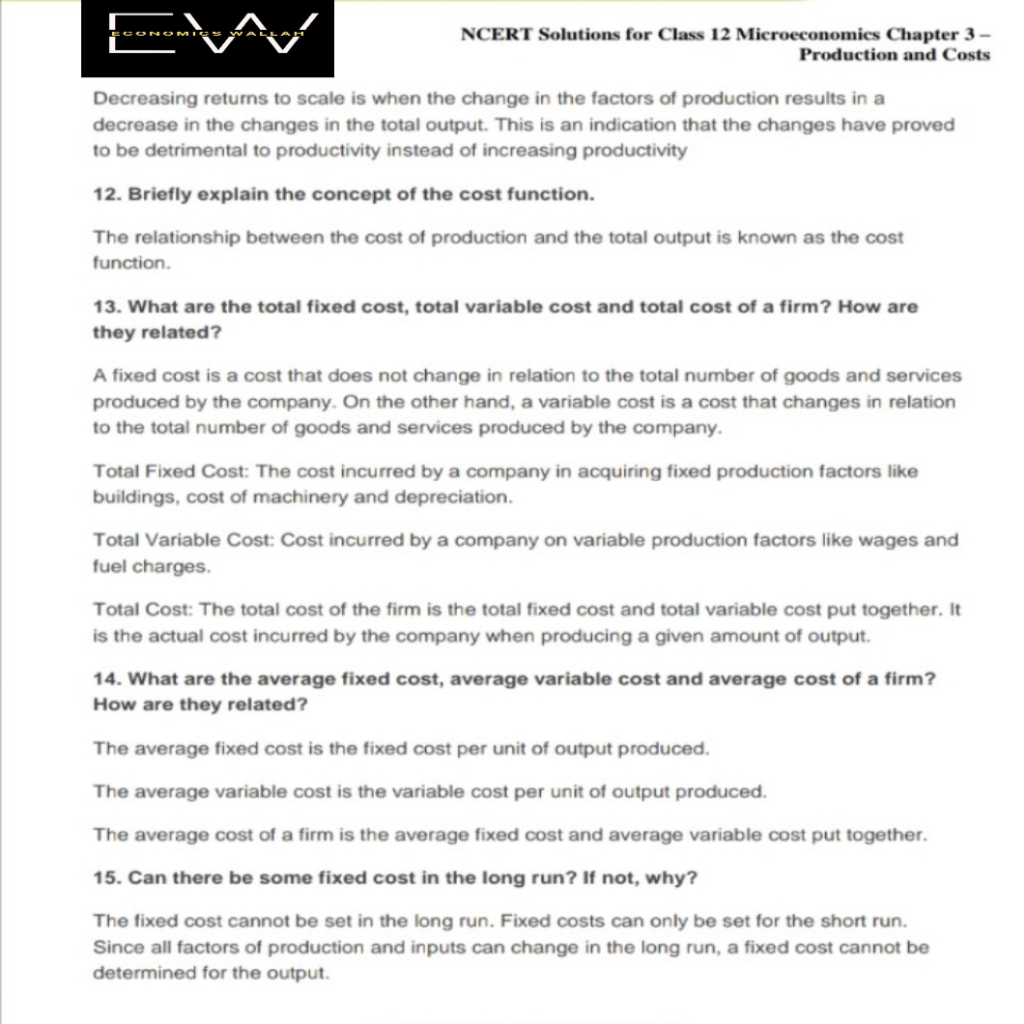
7. Long run The time period in which a firm can change all the factors of production is termed as long run. In the long period, a firm can change its scale of plant also.
8. Law of Diminishing Marginal Product The law states that with the increase in variable factor, keeping all other factors constant the marginal product of the variable factor diminishes after a certain level of production. Reason for operating of law
(i) Optimum combination
(ii) Change infactor combinations
9. Law of Variable Proportion The law states that with the increase in a variable factor, keeping other factor constant, initially the marginal product rises but after reaching a certain level of employment it starts declining.
Three stages of the law
(i) Increasing returns
(ii) Diminishing returns
(iii) Negative returns
10. Returns to Scale When producers change all the factors of production in the same production, the proportional relationship between output and factor inputs is known as returns to scale.
(i) Constant Returns to Scale When a proportional increase in all inputs results in an increase in output by the same proportion is called constant returns to scale.
(ii) Increasing Returns to Scale IRS holds when proportional increase in all inputs results in an increase in output by more than the proportion.
(iii) Decreasing Returns to Scale DRS holds when proportional in all inputs results in an increase in output by less than the proportion.
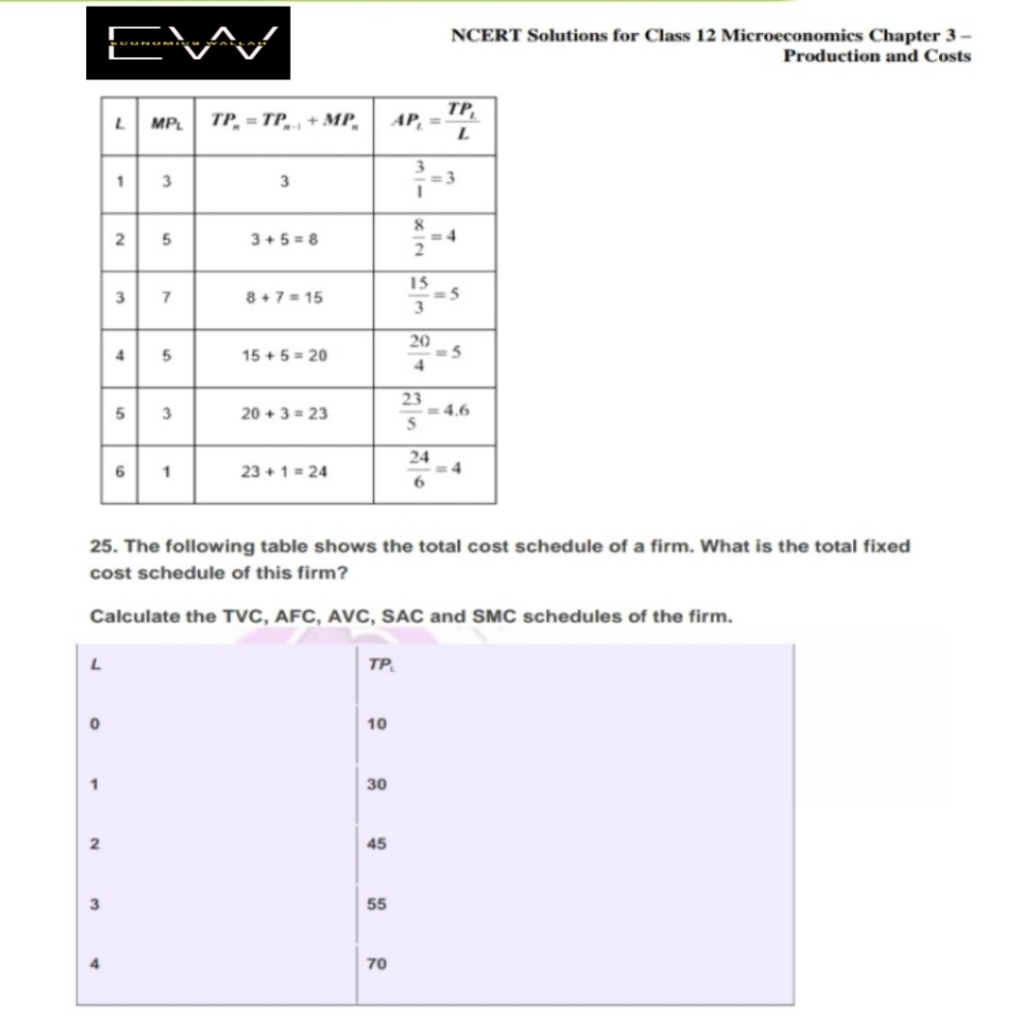
11. Cost Function The functional relationship between cost and quantity produced is termed as cost function.
C= F(Qx)
Here, C= Production – Cost
Qx = Quantity produced of x goods
12. Cost of Production Cost is the expenditure incurred by the producers on purchase of factor inputs such and land, labour capital etc, non-factor inputs such as raw material. fuel etc.
13. Explicit Cost The cost of those inputs whose payment is made to outsider of the firm. It is an accounting cost.
14. Implicit Cost The cost of self owned inputs used in the production process is called implicit cost. e.g.. rent of ownland, interest of own Implicit etc.


Hy frd
😊😊.
Follow me on instagram
https://instagram.com/csc_academy_01?igshid=ZGUzMzM3NWJiOQ==
 BIBEK
BIBEK 