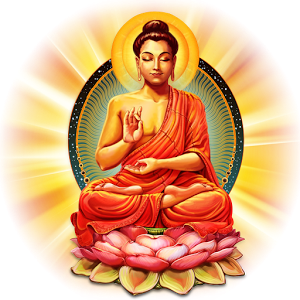
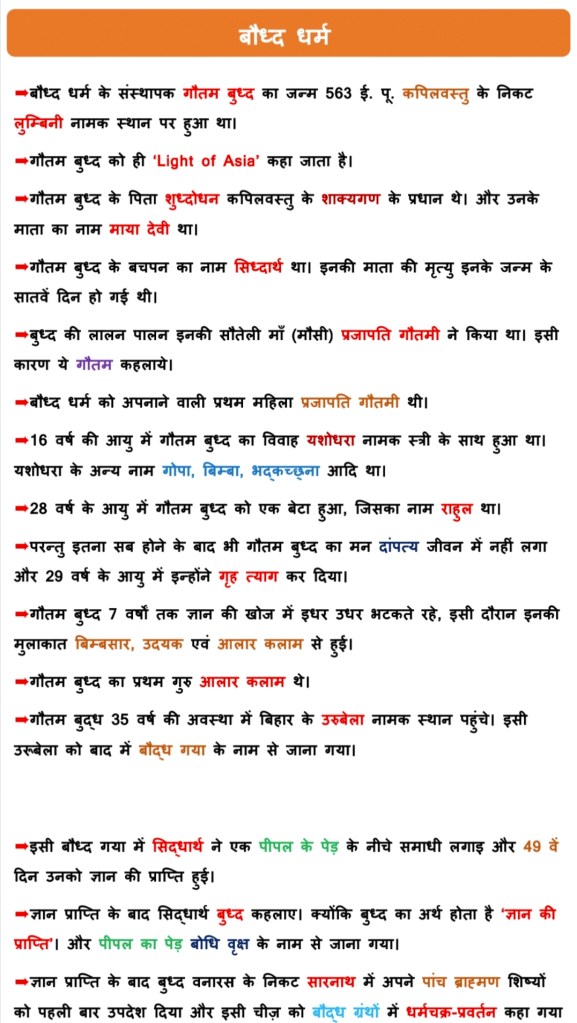
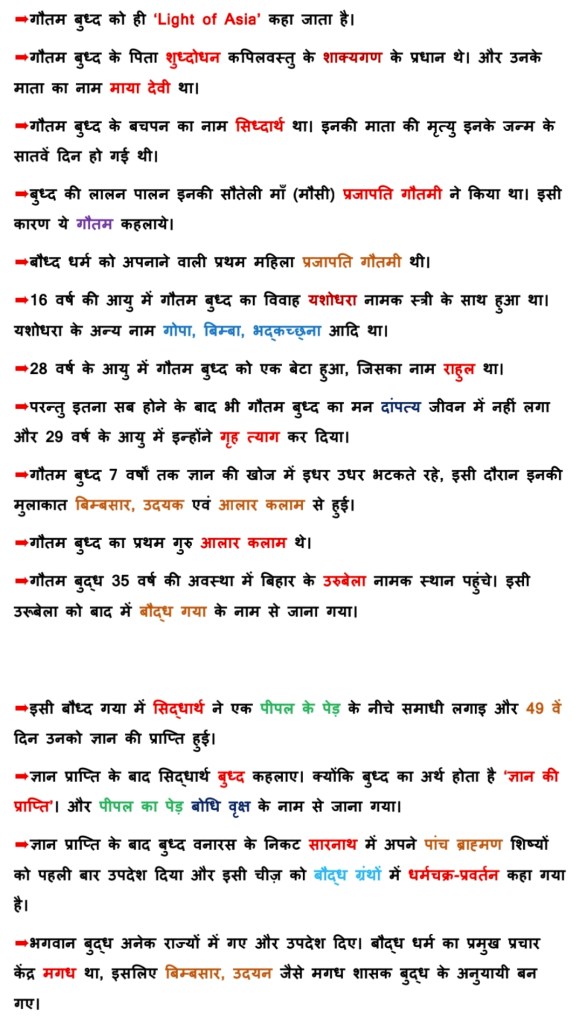
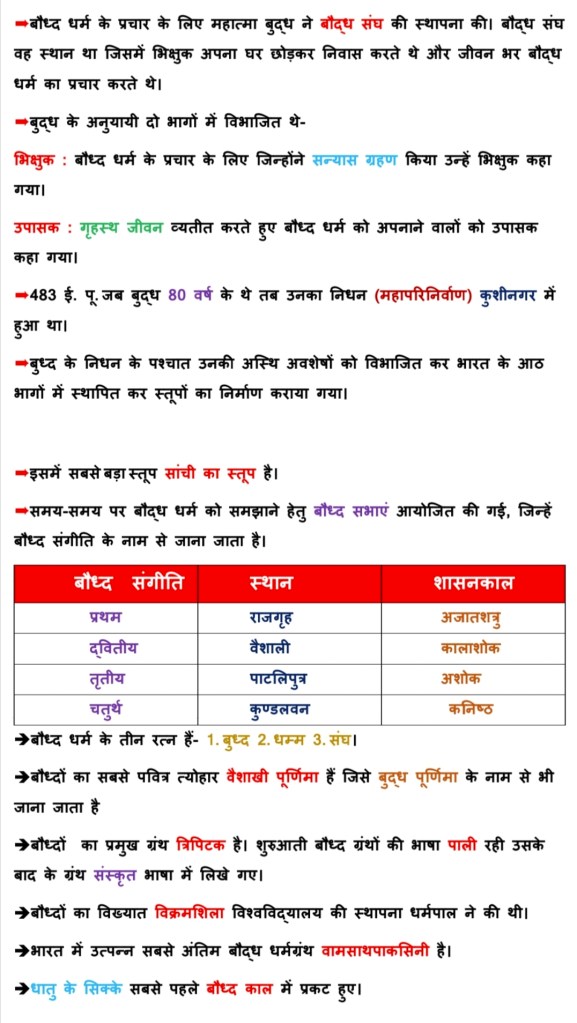
Buddhism is an ancient Indian religion, which arose in and around the ancient Kingdom of Magadha (now in Bihar, India), and is based on the teachings of Gautama Buddha[note 1] who was deemed a “Buddha” (“Awakened One”[3]), although Buddhist doctrine holds that there were other Buddhas before him. Buddhism spread outside of Magadha starting in the Buddha’s lifetime.
The Great Stupa at Sanchi, located in Sanchi, Madhya Pradesh, is a Buddhist shrine in India.
The Mahabodhi Temple, a UNESCO World Heritage Site, is one of the four holy sites related to the life of the Buddha, and particularly to the attainment of Enlightenment. The first temple was built by the Indian Emperor Ashoka in the 3rd century BC, and the present temple dates from the 5th century or 6th century AD. It is one of the earliest Buddhist temples built entirely in brick, still standing in India, from the late Gupta period.[1]
Rock-cut Buddha Statue at Bojjanakonda near Anakapalle of Visakhapatnam, Andhra Pradesh.
Ancient Buddhist monasteries near Dhamekh Stupa Monument Site in Sarnath.
Devotees performing puja at one of the Buddhist Caves in Ellora.
During the reign of the Mauryan Emperor Ashoka, the Buddhist community split into two branches: the Mahāsāṃghika and the Sthaviravāda, each of which spread throughout India and split into numerous sub-sects.[4] In modern times, two major branches of Buddhism exist: the Theravada in Sri Lanka and Southeast Asia, and the Mahayana throughout the Himalayas and East Asia. The Buddhist tradition of Vajrayana is sometimes classified as a part of Mahayana Buddhism, but some scholars consider it to be a different branch altogether.[5]
The practice of Buddhism lost influence in India around the 7th century CE, after the collapse of the Gupta Empire. The last large state to support Buddhism—the Pala Empire—fell in the 12th century. By the end of the 12th century, Buddhism had largely disappeared from India with the exception of the Himalayan region and isolated remnants in parts of south India. However, since the 19th century, modern revivals of Buddhism have included the Maha Bodhi Society, the Vipassana movement, and the Dalit Buddhist movement spearheaded by B. R. Ambedkar. There has also been a growth in Tibetan Buddhism with the arrival of the Tibetan diaspora and the Tibetan government in exile in India, following the Chinese annexation of Tibet in 1950. According to the 2011 Census there are 8.4 million Buddhists in India (0.70% of the total population).

 BIBEK
BIBEK 